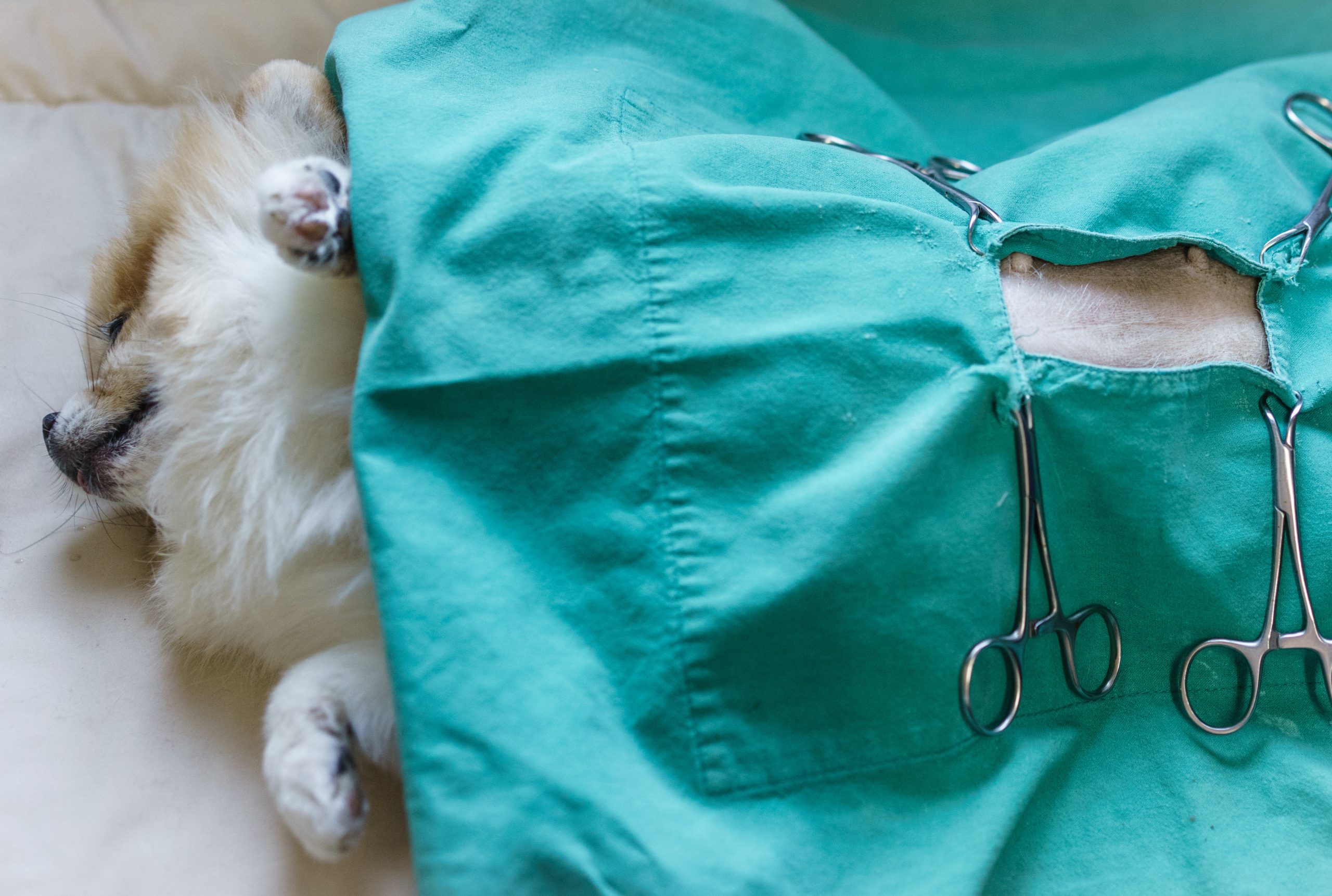
Preventing our four-legged friends from becoming parents is good for their health and decreasing the incidence of straying. This phenomenon is a serious problem in many Italian municipalities. Consequently, animal welfare associations and veterinarians have long been promoting the sterilization of dogs and cats, committed to putting their health conditions first.
Lory Veterinary Projects supports professionals by providing a wide range of tools needed to perform this task. In addition, the team designs cages for animal housing and customfurniture for individual clinic rooms.
Attention to detail, versatility of developed solutions and their high quality are the pillars of the company. These elements are essential to ensure animal health, so we always give our best.
In this context, spaying and neutering of dogs and cats is a relevant issue, which is good to explore in order to increase general awareness. Below, we cover related topics focusing on the welfare of our friends, the devices produced to perform the procedure, and those for hospitalization.
The right age for sterilization of dogs and cats
Identifying the best time during which to perform the operation is critical for animal health. The ideal time varies for multiple factors, such as species, sex and age. For example, sterilization of female dogs is recommended between 6 and 9 months of age, while for males it is recommended between 6 months and one year of age.
In the case of female dogs, performing the surgery before their first heat significantly reduces the likelihood of uterine and mammary cancer, hysterical pregnancies, infections, and hormonal surges. In contrast, males neutered by 12 months of age have a lower percentage risk of developing aggressive behavior, injuring themselves in fights with other specimens, and getting lost trying to reach females in heat.
Spaying of female cats should take place between 5 and 7 months, however before their first heat, as with female dogs. In fact, the
In fact, if male cats are neutered early, they run the risk of manifesting different dysfunctions. After 7 months of age, they can undergo the surgery without fear. In this way, they avoid marking territory, getting injuries in fights with other animals and running away from home in the search for female cats.
In general, sterilization of dogs and cats decreases the transmission rate of reproductive diseases and increases their longevity.
The benefits of sterilization of dogs and cats
As we pointed out at the beginning, hindering the mating of our little friends is an essential practice to combat straying. Through the sterilization of dogs and cats, the number of births and, therefore, the percentage of strays and guests in kennels, catteries and shelters is greatly lowered.
Thus, the intervention is considered an effective form of animal health protection. Precisely from this perspective, it is crucial to present its other varied benefits:
- cancellation of unwanted litters;
- Prevention of breast cancer and severe uterine infections;
- decreased spread of dangerous viruses , such as FIV (feline immunodeficiency virus) and Felv (feline leukemia), which occurs through the exchange of body fluids;
- Limitation of the risk of traffic accidents and assaults by other peers, as the tendency to move from home is reduced;
- contrast of habits and attitudes influenced by the fertility period, such asrestlessness and marking territory.
Other factors affecting theoutcome of cat and dog sp ay/neuter are the experience, skills and tools of veterinarians. Our company supports clinics by developing state-of-the-art surgical instruments, inpatient cages, and furniture accessories for various spaces.
Customization is one of our main strengths. There are many solutions created, and we are able to adapt them to the particular needs of the client and the animals.
Recovery after sterilization of dogs and cats
It is quite easy for our four-legged friends to recover from this kind of surgery. In fact, spaying and neutering of dogs and cats is non-invasive and involves a short recovery period, shorter for males than for females.
Males often undergo vasectomy, which does not involve removal of the testes, a procedure performed during orchiectomy instead. In contrast, in females only the ovaries (ovariectomy) or the uterus along with the ovaries (ovariohysterectomy) are removed.
The choice of the type of sterilization of dogs and cats mostly depends on their health conditions. However, today the various operations are routine, and the use of
For example, it is specified that they should be fasting from midnight on the day they are operated on. In addition, following sterilization, dogs and cats should be monitored, remain at rest, and limit physical activity. In any case, it is the doctor’s job to advise on how to care for them and any drug therapy to be administered. Practices change depending on the operation and the health status of our four-legged friends.
Sterilization equipment for dogs and cats
The implementation of state-of-the-art technologies and methods in the veterinary field has helped facilitate the performance of interventions and increase their success rate. Thus, it is now possible to treat many disorders and diseases that could not be treated in the past.
In addition, the evolution of adopted devices makes it possible to minimize the invasiveness of operations and ensure animal welfare. Dog and cat sterilization is one of the most obvious examples of these changes. In fact, today it is considered a routine surgery from which our four-legged friends are able to recover quickly.
Using the right equipment is essential to ensure optimal results. For this reason, our staff creates high-quality, durable, practical, and versatile solutions such as
The operating tables we make belong to two distinct categories, as they can be electric or hydraulic. Both models are adjustable in height and allow the animal to be placed on a stable and hygienic surface.
Our anesthesia systems differ, primarily, in the type of set-up and gases emitted. The catalog includes, for example, tabletop equipment, carts with or without drawers, stands, and overhead turrets.
Inpatient cages are available in multiple configurations: standard, modular and mobile. The versions designed differ to fit the spaces of different clinics. The common elements are comfort, hygiene and functionality, a combination created through continuous research to optimize the products.
Contact us for more information about our cat and dog spay/neuter devices.