Veterinary clinics must meet maximum hygiene standards to ensure the well-being of every animal and person within them. Therefore, appropriate sanitation techniques must be adopted for the premises, just as for hospitals and any other health care facility.
Recent studies demonstrate the effectiveness of ozone sterilization for both enclosed spaces and surgical devices, for example, laparoscopic instruments. In fact, ozone is the most powerful natural disinfectant known to date, capable of eliminating up to 99.98% of pathogens, viruses, fungi, allergens, and molds present in the most hidden places.
Deep sanitization of the environments and equipment used is essential to counteractthe spread of disease, the onset of infection, and post-operative complications in our four-legged friends. At the same time, this practice also protects doctors, operators, owners and other people working in or entering veterinary clinics from possible infection.
In addition to removing all kinds of biological, chemical and mineral contaminates from any surface, ozone is able to erase odors and make rooms and air extremely clean. Consequently, using this substance with the intended sterilization techniques ensures that high safety standards are achieved.
In this article, we specifically explore the use of this procedure for the disinfection of veterinary laparoscopic instruments.
Types of laparoscopic instruments to be sterilized
When performing surgeries on patients, one must have state-of-the-art equipment and implement specially designed techniques to achieve successful outcomes. In addition, it is critical to sanitize every component to prevent bacterial contamination and possible serious complications for the animals.
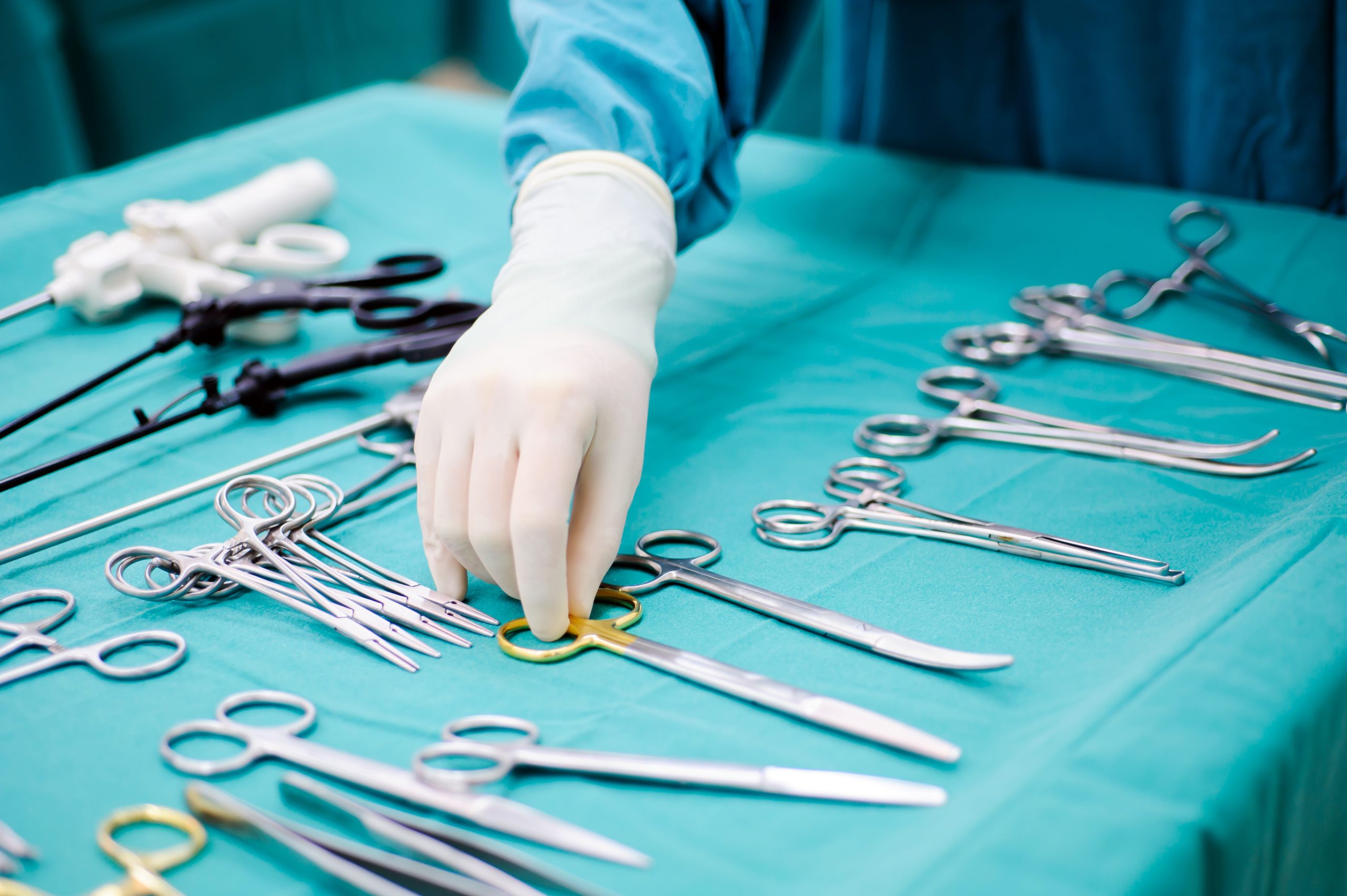
Regarding laparoscopic operations, it is first necessary to use special cameras placed at the end of a long, thin tube. These cannulas, called trocars, are inserted into the abdominal cavity along with the instruments useful in various operations, such as forceps, scissors and needle holders. Of course, these medical devices have special shapes and sizes designed specifically to match the characteristics of the cannulas.
Other items used in this area include staples, suturing machines and lasers, advanced technologies essential to carry out with extreme precision every action planned to restore animals to good health.
As we pointed out earlier, the equipment used must be disinfected with specific products and optimal procedures. For more than 30 years, we have worked alongside veterinarians to devise and provide them with effective solutions for the care and treatment of our four-legged friends. In particular, we develop state-of-the-art machinery for ozone sterilization of laparoscopic instruments.
Effective ozone sterilization for laparoscopic instruments
The prevention of infections and the spread of viruses in veterinary practices relies on countering their transmission. To perform this function,
For this reason, ozone sterilization is recommended for disinfection of interior spaces in veterinary clinics and laparoscopic instruments. First of all, special air purifiers that remove harmful dust and pathogens must be installed. Second, all surfaces and objects with which animals come into contact, such as operating and examination tables, cages, waiting rooms, clothing worn by professionals, and equipment needed during surgeries, must be sanitized.
To rule out any possibility of infection within the veterinary clinic, a specific procedure must be followed that begins with washing medical devices with ozonated water. Finally, ultrasonic systems are used to remove all traces of any bacteria and viruses. Ozone sterilization machines for laparoscopic instruments that we design with established methodologies guarantee excellent performance.
In fact, the extensive research conducted in the field by our team of experts has enabled us to devise innovative solutions that stand out in the target market.
Strengths of ozone sterilization for laparoscopic instruments
The current need to significantly cut down the amount of waste produced finds a satisfactory answer in the production of reusable items. With this in mind, the use of non-disposable devices in the medical field has recently increased significantly. Indeed, these items have greater strength and durability, do not require large storage spaces, and do not have to be replaced and disposed of after a single use.
However, appropriate sanitation methods must be adopted for equipment used during examinations and surgeries, for example, laparoscopic instruments. Only suitable machines that have excellent cleaning and disinfecting action can achieve adequate standards. Certainly, ozone sterilization is an indicated procedure in this area, as its oxidizing power is able to inactivate viral strains and destroy bacteria, molds, fungi and insect pests, preventing their multiplication.
Unlike other compounds,ozone acts instantly and prevents the spread of resistant pathogens. Its effectiveness has been certified by the Ministry of Health’s protocol dated 31/07/1996 No. 24482. Accordingly, specialized equipment, such as that developed by our company, is recommended for sanitizing veterinary devices. These aspects are essential for compliance with the criteria established by Legislative Decree 81/08 on the protection of health and safety in the workplace.
Would you like to find out the exact features and functions of our technologies for ozone sterilization of laparoscopic instruments? Contact us or fill out the form on the website and we will provide you with all the necessary details.